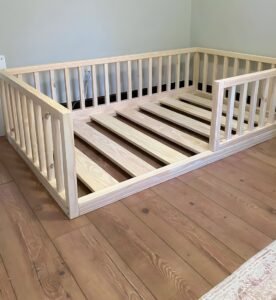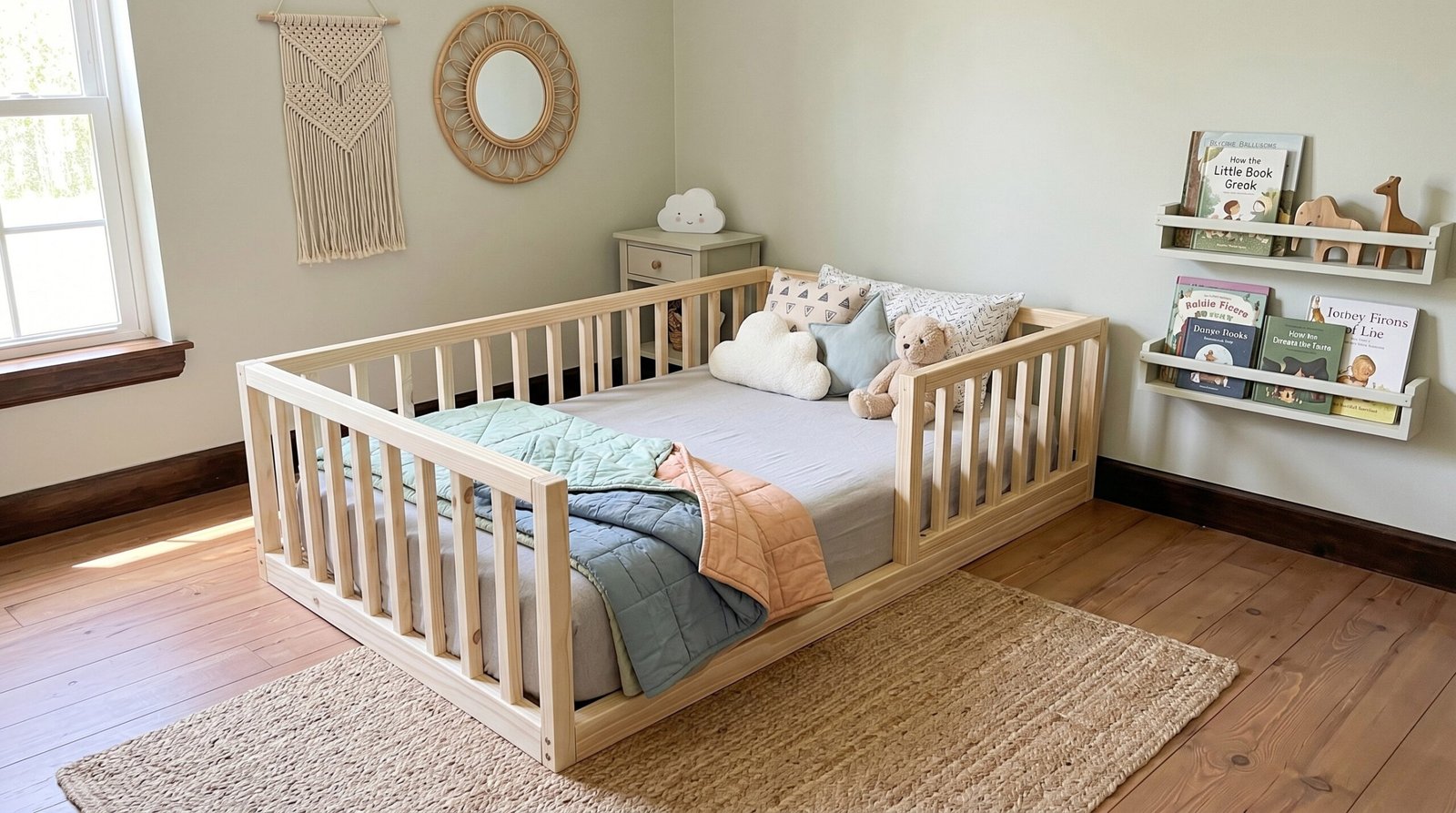
A floor bed removes the physical barriers that a cot or a railed bed puts between your child and the room. That freedom is the whole point. But it does shift some of the safety responsibility from the furniture to the environment. Before the first night on a floor bed, there are a handful of things worth getting right.
This guide covers the practical safety considerations: age and readiness, room-proofing, mattress choice, bedding and temperature. It pairs with our broader piece on the pros and cons of Montessori floor beds, which covers whether a floor bed is the right fit in the first place.
Is my child old enough?
Age matters, but it is not the only factor. Here is a reasonable framework:
- Under 12 months: most paediatric guidance recommends a cot at this stage. A flat, firm cot mattress in a clear cot meets the safest-sleep guidelines for infants. Consult your paediatrician before making any change.
- 12 to 18 months: the border zone. Some children are ready; others are not. Use the readiness signs below rather than age alone.
- 18 months to 5 years: the floor bed works well for most children in this range, particularly for the cot-to-bed transition.
- 5 years and up: most children prefer the height and feel of a standard bed by this point. A floor bed can start to feel babyish. Time to size up.
Readiness signs that matter more than age: your child is attempting to climb out of the cot, they can follow basic room rules, they are sleeping relatively consistently, and they can understand a simple instruction like ‘stay in your bed until morning’.
Room-proofing: what to check before the first night
A child who can get out of bed unsupervised needs a room that is safe for unsupervised time. Go through the following before switching to a floor bed:
- Electrical sockets: cover or replace with shuttered sockets throughout the room.
- Furniture that can tip: anchor bookshelves, chest of drawers and any freestanding storage to the wall. This applies in any child’s room, but becomes urgent when the child can reach them independently.
- Cords and blinds: window blind cords are a strangulation risk. Replace looped cords with cordless blinds or tie them well out of reach.
- Sharp corners: use corner guards on any low furniture at head height from the floor.
- Doors: decide whether you want the room door to stay closed at night. A closed door limits where the child can wander. If you leave it open, ensure the rest of the house is also safe for unsupervised exploration.
- Loose items: clear the floor immediately around the bed of anything the child could land on or trip over if they roll out.
- Nappy and change items: if the room doubles as a changing area, ensure nappy cream and any small items are stored out of reach.
Mattress height and firmness
The whole point of a floor bed is that it is low. A few centimetres of clearance is all you need; the mattress does not need to be on the bare floor. A low wooden platform frame of 5 to 10cm is enough to keep the mattress off cold flooring and to allow a little air circulation underneath.
For firmness: use a mattress that is firm enough to support the child properly but not so thick that it defeats the low profile. A 10 to 15cm mattress is the right range for most floor bed frames. Anything much taller starts to defeat the purpose, and a very soft or sagging mattress creates poor posture for a growing child.
Check the mattress fits the frame snugly with no gaps at the edges. A gap between the mattress and the frame side is a potential entrapment hazard, particularly for younger children.
Bedding and temperature safety
For children under 24 months, heavy duvets increase the risk of overheating. A fitted sleeping bag rated to the season is safer than loose bedding. Once your child is over two and reliably moves bedding around themselves, a light duvet is fine.
Whatever bedding you use:
- Keep pillows firm, not soft or stuffed.
- Avoid loose blankets with tassels or long loops that could become a hazard.
- Do not pile up cushions or soft toys around a young toddler; one or two firm, age-appropriate soft toys is enough.
Cold floors in South African winters
This is a genuinely practical concern in Johannesburg, Pretoria and the Highveld, where winter nights drop to near-zero. A mattress at floor level is more exposed to the ambient temperature than a raised bed.
Simple fixes:
- A thick rug under and around the floor bed creates a warm landing zone and adds insulation from the floor.
- A slightly raised platform frame of 8 to 10cm significantly reduces cold transfer from the floor.
- A sleeping bag rated to 0 degrees Celsius keeps the child warm without relying on heavy loose duvets.
- If the room gets very cold, a safely placed convector heater with a thermostat can maintain a stable room temperature. Keep it away from the bed and never use an open-element heater in a child’s room.
Cape Town winters are milder but damp. Focus on ventilation as much as warmth: a slightly raised frame helps airflow under the mattress and reduces the chance of condensation.
Is a house bed frame safer than a bare floor mattress?
For many families, a low house-frame floor bed is a good middle ground. The frame gives the child a defined sleeping space, which can reduce overnight wandering. The low roof of the house shape creates a contained nook that many toddlers find reassuring. But the entry is still open on at least one or two sides, so independent access is maintained.
Our house bed frames can be made to sit at floor level, keeping the full Montessori benefit while giving the room a finished, considered look. They are solidly built from SA Pine and have no sharp edges, corners or protrusions at child height.
If you are unsure whether to go with a pure floor mattress or a house-frame floor bed, have a look at our house bed collection and our nursery range for the options we build.
A safety checklist before the first night
- All sockets covered or shuttered
- Freestanding furniture anchored to wall
- Window blind cords removed or tied out of reach
- Sharp furniture corners guarded
- Floor cleared of loose items around the bed
- Mattress firm, correctly sized and fitting snugly in the frame
- No gaps between mattress and frame sides
- Bedding age-appropriate (sleeping bag for under-twos)
- Room temperature considered, rug in place if cold floor
- Door situation decided: closed or rest of house also proofed
Once those boxes are ticked, the setup is sound. Most families find the adjustment takes a week or two before settling into a reliable routine.