Solid wood furniture is built to last well beyond childhood: most of our beds, desks and storage pieces are in their second or third bedroom by the time the original owner is in high school. But longevity doesn’t happen by accident. A bit of routine care and a few good habits make the difference between furniture that looks worn at five years and furniture that still looks beautiful at fifteen.
This is the practical care guide we’d hand to anyone buying solid wood kids furniture in South Africa.
Day-to-day cleaning
For routine cleaning, the simplest approach is almost always the best one. A soft, slightly damp microfibre cloth wiped over the surface picks up dust, fingerprints, food residue and the general life of a child’s room. No spray cleaners, no polish, no chemicals.
A few practical rules:
- Damp, never wet. Wood absorbs water. A cloth that’s been wrung out properly is fine; a dripping cloth is not.
- Wipe in the direction of the grain. It picks up dust more effectively and avoids leaving streak marks.
- Dry immediately after cleaning with a separate dry cloth. Standing moisture is the most common cause of finish damage.
- Avoid the “magic” sprays. Most furniture polishes are designed for older lacquer finishes and can dull modern PU coatings over time.
For more stubborn marks, sticky residue, marker pen, lunch, a drop of mild dish soap in lukewarm water on a soft cloth handles almost anything. Wipe, then rinse with a clean damp cloth, then dry. Don’t scrub.
Dealing with scratches and dents
A child’s bedroom is going to scratch the furniture. Pretending otherwise is a way to be permanently disappointed. The good news is that solid wood absorbs minor damage in a way that engineered wood simply cannot.
Minor scuffs on a painted finish. A child-safe touch-up pen in a matching colour is usually enough. We can supply touch-up paint matching any of our finishes, drop us a message if you’d like a small tin sent through.
Small scratches on a sealed wood finish. These often fade on their own over a few months as the surrounding wood and finish adjust. A drop of furniture wax rubbed in lightly can also help.
Larger gouges or dents. Solid wood can be sanded back and refinished, something engineered wood can’t survive. For significant damage, it’s worth weighing the cost of a workshop refinish against living with the imperfection. Many families come to love the marks because they tell the story of childhood.
Watermarks. White rings from cups or glasses on natural wood finishes can often be lifted with a low-heat iron over a clean cloth, working in 5-second intervals. Test in an inconspicuous spot first.
Climate considerations across South Africa
South Africa’s range of climates affects wooden furniture more than most owners realise. The same bed in Cape Town’s winter humidity behaves differently in Johannesburg’s dry winter or Durban’s coastal salt air.
Highveld dryness (Joburg, Pretoria, Bloemfontein). Dry winter air can cause wood to shrink slightly. You may notice tiny gaps appearing at joints in winter that close up by summer. This is normal and not structural. A humidifier in the child’s room can help, primarily for the child’s comfort, but the wood benefits too.
Cape Town and Western Cape damp. Winter humidity can cause minor wood expansion. Drawers may stick briefly in mid-winter. A small wax along the runners usually solves it. Avoid placing pieces against external walls that get cold and damp.
Coastal salt air (Durban, Garden Route). The biggest enemy of wooden furniture in coastal homes is salt-laden moisture. Keep pieces out of direct sea breezes where possible, wipe more frequently to remove airborne salt, and consider an annual coat of furniture wax to refresh the protective layer.
General principle. Avoid placing wooden furniture directly in front of heaters, air conditioners or sunny windows. Rapid temperature swings and direct UV are harder on the finish than any amount of normal child use.
Cleaning specific pieces
Different pieces have different care needs. A quick rundown for the most common items in a child’s bedroom.
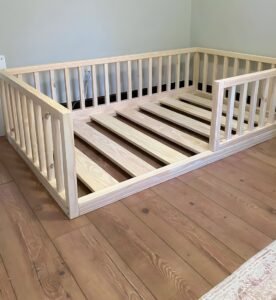
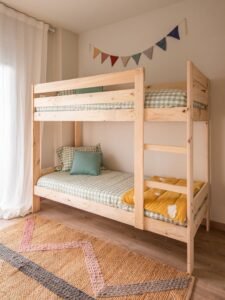
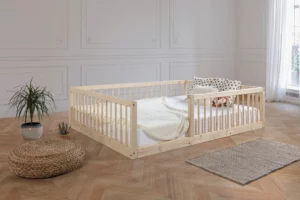
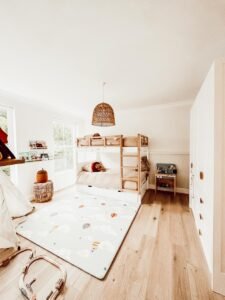
Beds. Wipe the headboard, footboard and rails weekly. Check the slats and central support beam every six months, particularly if the bed has been jumped on. Tighten any bolts that have worked loose. The kids bed collection is built with through-bolts that hold up to a decade of use, but they benefit from an occasional check.
Desks and tables. Use a protective mat under hot drinks, plates, and craft projects with glue or paint. The PU finish handles a lot, but it isn’t bullet-proof. For a desk that gets daily use, a fabric or felt blotter on the work surface extends the finish dramatically. See our tables and desks collection.
Chairs and benches. Check the seat-to-leg joints every six months. Chairs take more abuse than any other furniture in the room, children rock backwards, lean on the legs, drag them across floors. A drop of wood glue into a tightening joint goes a long way.
Bookshelves and storage. Wipe shelves periodically and rotate heavy items. A shelf that’s been carrying the same heavy art books for three years can develop a slight bow; rotating shelves prevents this. Our shelves and storage range is built with adjustable shelves on most pieces, which helps.
Wall-mounted pieces. Check mounting hardware annually. Plaster moves, screws settle, and a piece that was tight on installation may need to be re-secured after a year.
The annual refresh
Once a year. We recommend the start of the school holidays as a natural time, give every wooden piece in the room a half-hour of attention:
- Clear everything off it
- Wipe with a damp cloth, then dry
- Check all visible bolts and screws; tighten any that have loosened
- Inspect the finish, note any areas needing touch-up
- For natural wood finishes, apply a thin coat of furniture wax with a soft cloth
This sounds like a lot but takes maybe thirty minutes for an entire bedroom. The pay-off is furniture that ages gracefully rather than visibly.
What to avoid
A short list of things that consistently shorten the life of wooden kids furniture:
- Multi-purpose household cleaners on wood surfaces. Most contain solvents that degrade the finish over time.
- Wet cloths or dripping water. Particularly on the joints, where moisture seeps in and weakens glue.
- Furniture polish on PU finishes. Modern coatings don’t need it and most polishes leave a residue that attracts dust.
- Heavy items balanced on small shelves. Wood under sustained heavy load develops a permanent set; once it’s bowed, it’s bowed.
- Stickers and tape directly on the finish. Removing them takes paint off. If your child loves stickers, give them a designated wall panel or a board to decorate.
- Cleaning the wood with vinegar. A common online recommendation that we’d avoid. Vinegar dulls most PU finishes over repeated use.
When pieces move rooms
A piece of furniture rarely stays in one bedroom for its entire life. Beds graduate to a sibling’s room, desks become guest-room desks, bookshelves move to the living room. A few practical points for the move:
- Dismantle properly. Most of our beds have specific dismantling sequences in the original instructions. If you’ve lost yours, get in touch and we’ll send a fresh set.
- Don’t drag. Always lift. Dragging on tile or laminate stresses the joints and can chip the finish.
- Reassemble on a level floor. Even a small tilt creates uneven stress on the frame.
- Refresh before re-use. Take the half-hour annual-refresh routine before placing the piece in its new room.
Refinishing: the long-term option
The single biggest argument for solid wood furniture over engineered alternatives is the option to refinish. A bed that’s looking tired after ten years can be sanded back to bare wood and re-coated, emerging looking essentially new. The same isn’t true for MDF or particleboard, once the surface is gone, the piece is finished.
A short framework
If you want a single rule of thumb: treat the wood like a leather shoe rather than a piece of plastic. Wipe it occasionally, give it the right environment, address minor damage early, and accept that the marks of use are part of its character. Solid wood furniture rewards this approach with a lifespan that easily outlasts childhood.
For the full story of how our pieces are made, have a look at our production page. And if you have a specific care question for a particular piece, or you’d like touch-up paint to match a finish, drop us a message.