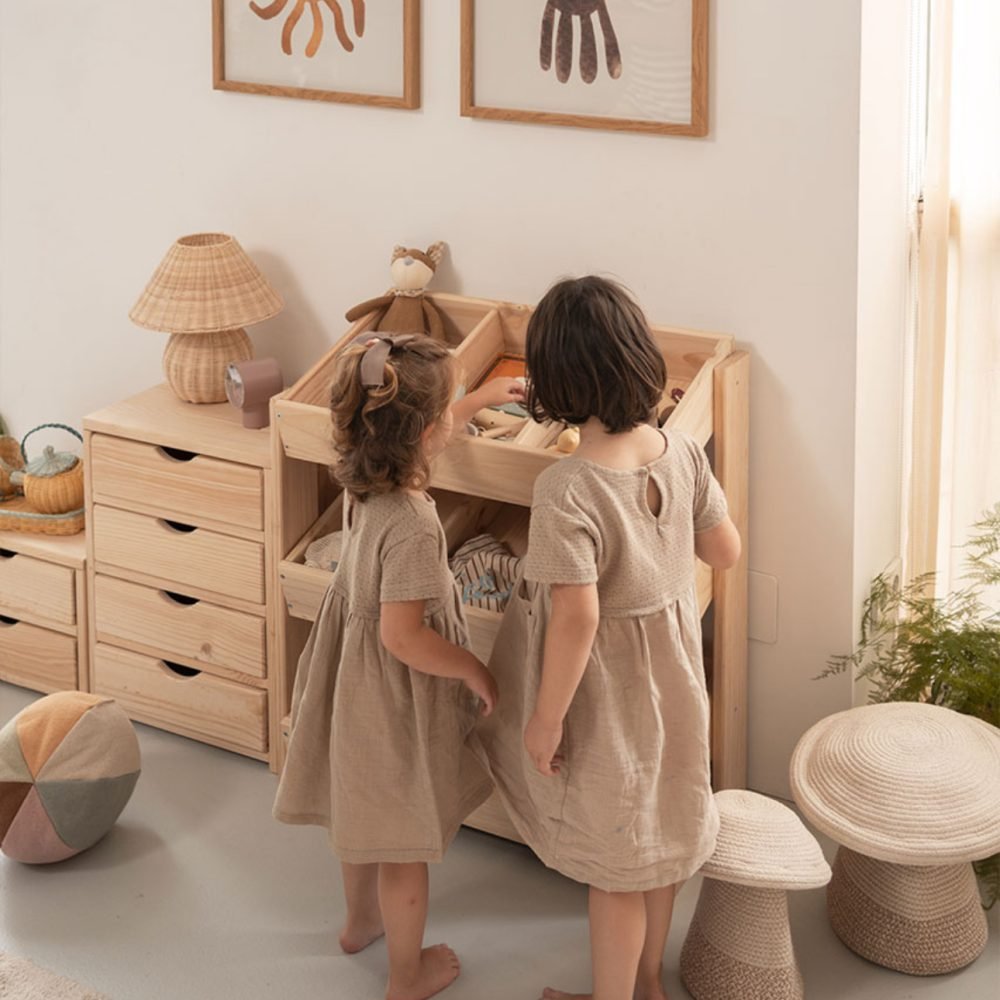

What Accessible Storage Means in Practice
Accessible storage keeps items within a child’s reach and removes unnecessary barriers.
This typically includes:
- Lower storage units
- Open or partially open formats
- Clear visibility of items
When children can see what’s available, they are more likely to choose activities independently.
Supporting Independent Play
When toys are easy to access, children don’t need to rely on adults to start or change activities.
This creates:
- Longer periods of independent play
- More frequent use of existing toys
- Less frustration
Storage becomes part of how the room supports autonomy.
Reducing Overwhelm
Too many items, or poorly organised storage, can make it harder for children to engage.
Accessible storage helps by:
- Limiting visible items
- Creating clearer choices
- Reducing clutter
This often leads to more focused, sustained play.
How to Set Up Accessible Toy Storage
- Keep frequently used items within easy reach
- Use simple storage units rather than complex systems
- Rotate toys if needed to reduce clutter
- Avoid stacking items too high
Well-designed toy storage doesn’t just organise a room – it supports how children interact with their space. By keeping items visible and accessible, it becomes easier to encourage independent, everyday use.