
Where Tables Tend to Work Better
Tables tend to suit spaces that are still fluid.
They don’t define how they should be used, which makes them easier for younger children. A round table, in particular, encourages shared use – drawing, building, moving between activities without a fixed position. Rectangular tables introduce a bit more structure, but still allow flexibility. Seating can be mixed and adjusted, and the surface can shift between uses without needing to be reset.
When a Desk Starts to Make Sense
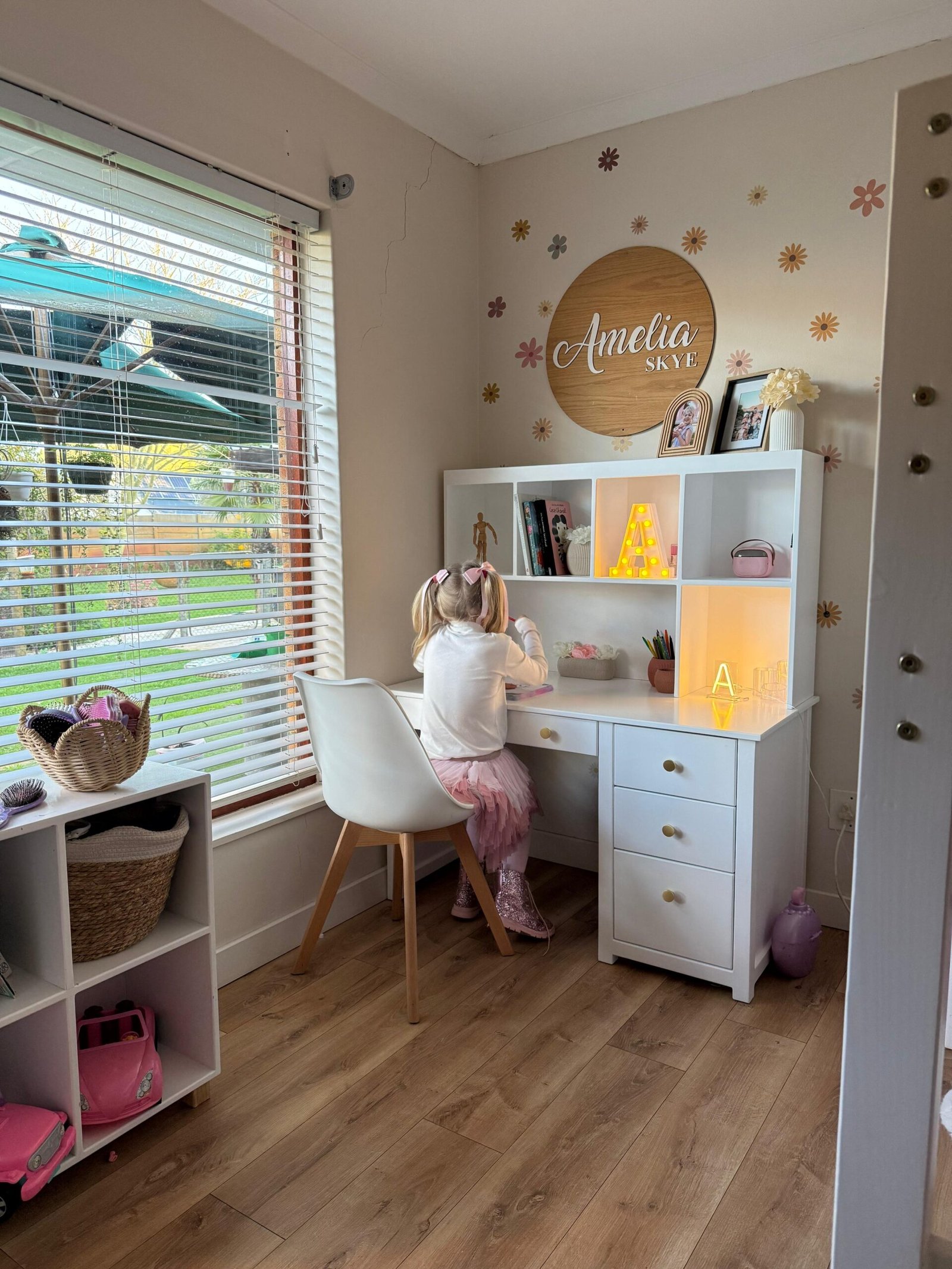
At a certain point, a more defined setup becomes useful. A desk creates a clearer boundary – not in a restrictive way, but in a way that supports focus. There’s a sense that this is where certain activities happen, which can make it easier to settle into reading, writing or homework.
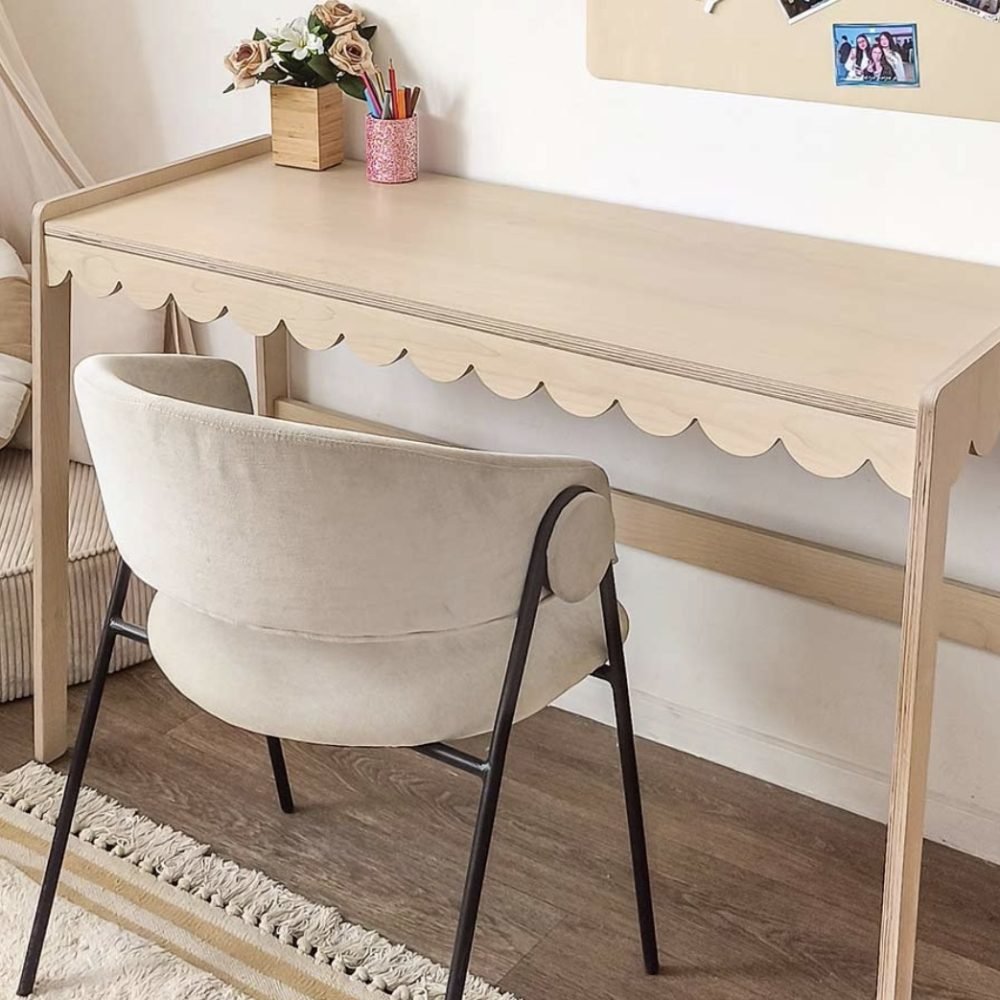
This doesn’t mean removing flexibility entirely. Simpler desk designs still allow for different uses, but with a slightly more intentional structure.
Spaces That Need to Do Both
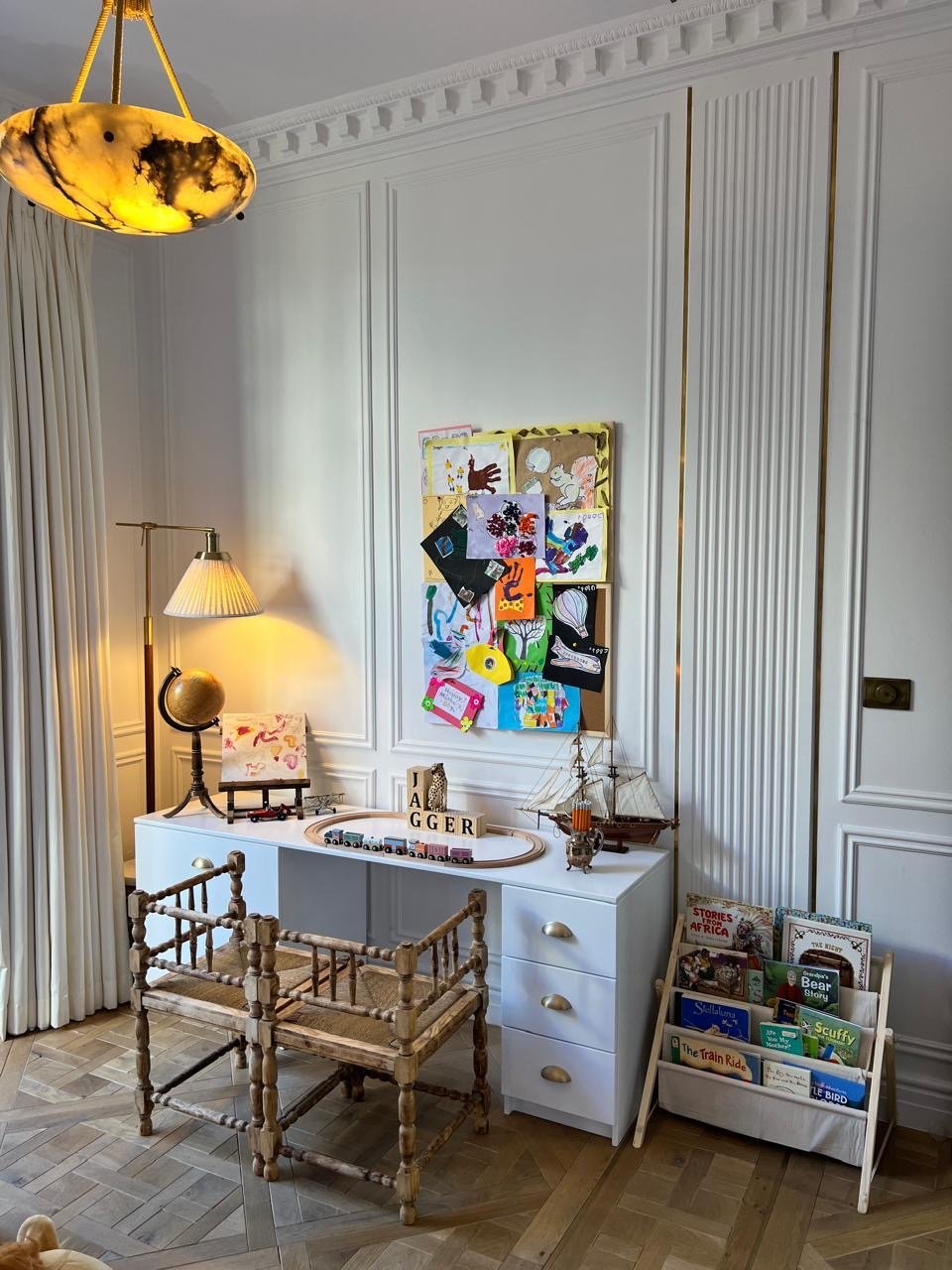
In many homes, the same area needs to support both play and more focused activities.
This is where multi-purpose pieces work well. A surface that’s large enough to be shared, or paired with storage, allows the space to shift without needing to introduce multiple pieces of furniture.
Choosing for Now Without Limiting Later
The decision doesn’t need to be permanent.
A table can become a desk. A shared surface can become more individual over time. What matters more is choosing something that fits comfortably into the room and can adapt without needing to be replaced too quickly.
Rather than choosing based on age alone, it’s often more useful to think about how the space is used day to day. The right piece is the one that supports that — whether it leans more towards flexibility or a more defined setup.