
Start With the Structure, Not the Styling
The foundation of the room matters more than the finishing touches.
A well-proportioned bed, a usable surface for play or learning, and considered storage will shape how the space functions day to day. Once those are in place, the room already begins to feel complete.
It also avoids the need to rely on decoration to carry the space.
Let Key Pieces Do the Work
Rather than filling a room with smaller items, it’s often more effective to choose a few well-made pieces that hold their own.
A table with balanced proportions. A bookshelf with subtle detail. Seating that adds something quietly, without drawing too much attention.
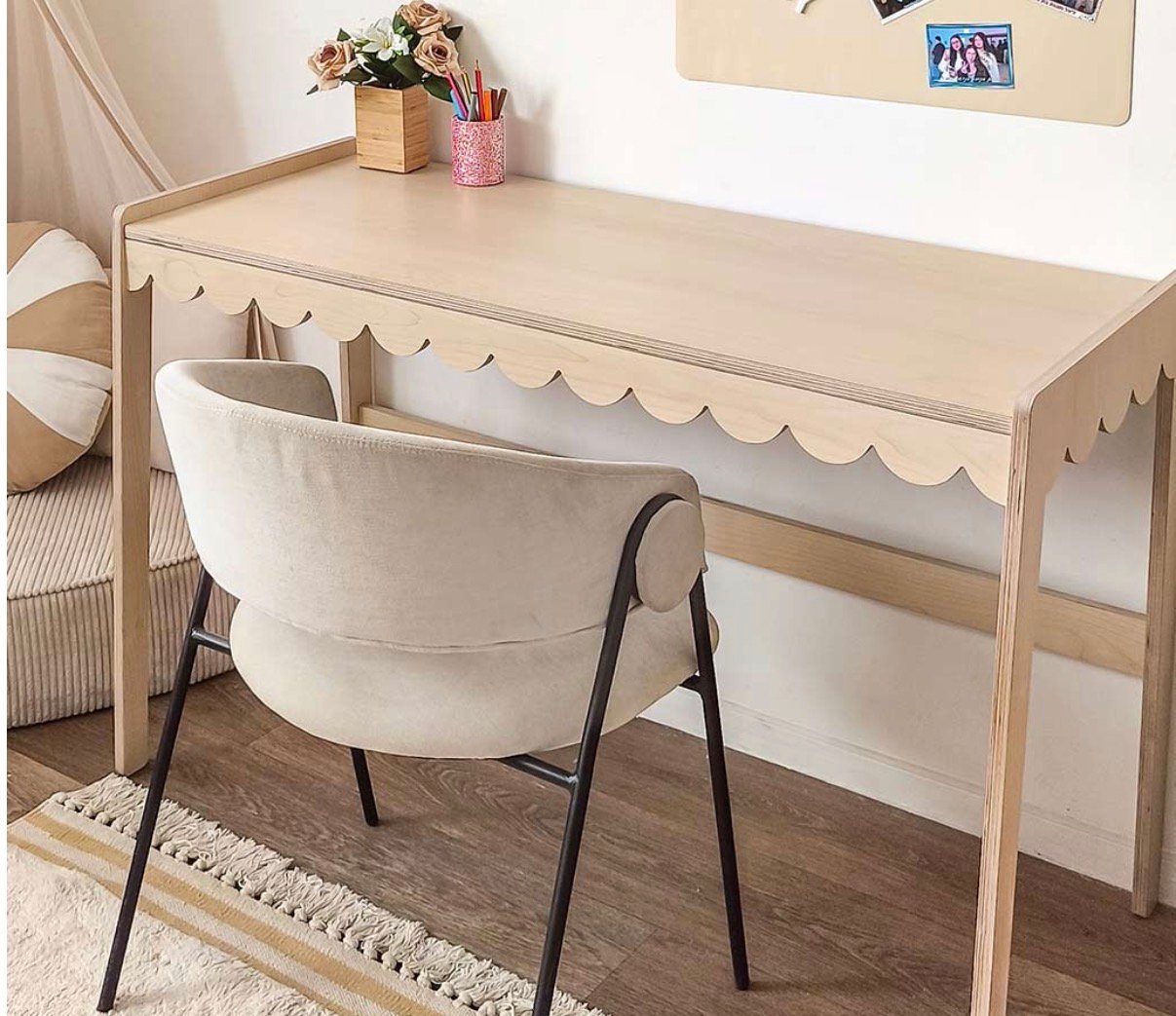
Details like scalloped edges, rattan panels or soft shapes can introduce character, but in a way that still feels controlled.
Avoid Over-Theming
Highly themed rooms tend to date quickly. They can also limit how the space evolves as your child grows. What works at one stage may feel out of place not long after. Keeping the base of the room more neutral allows for change – whether that’s through textiles, objects or simply how the space is used.
Keep Surfaces Usable
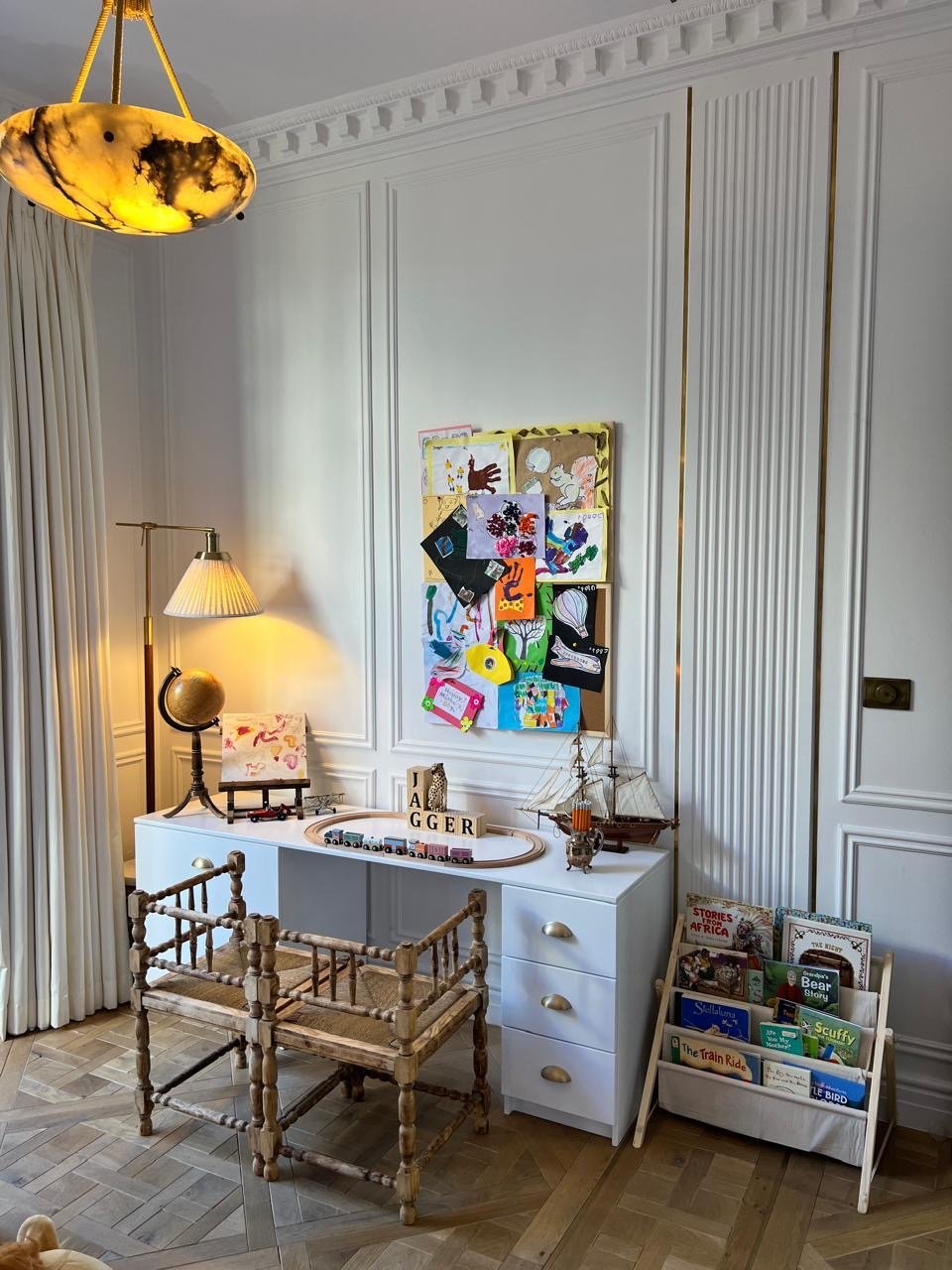
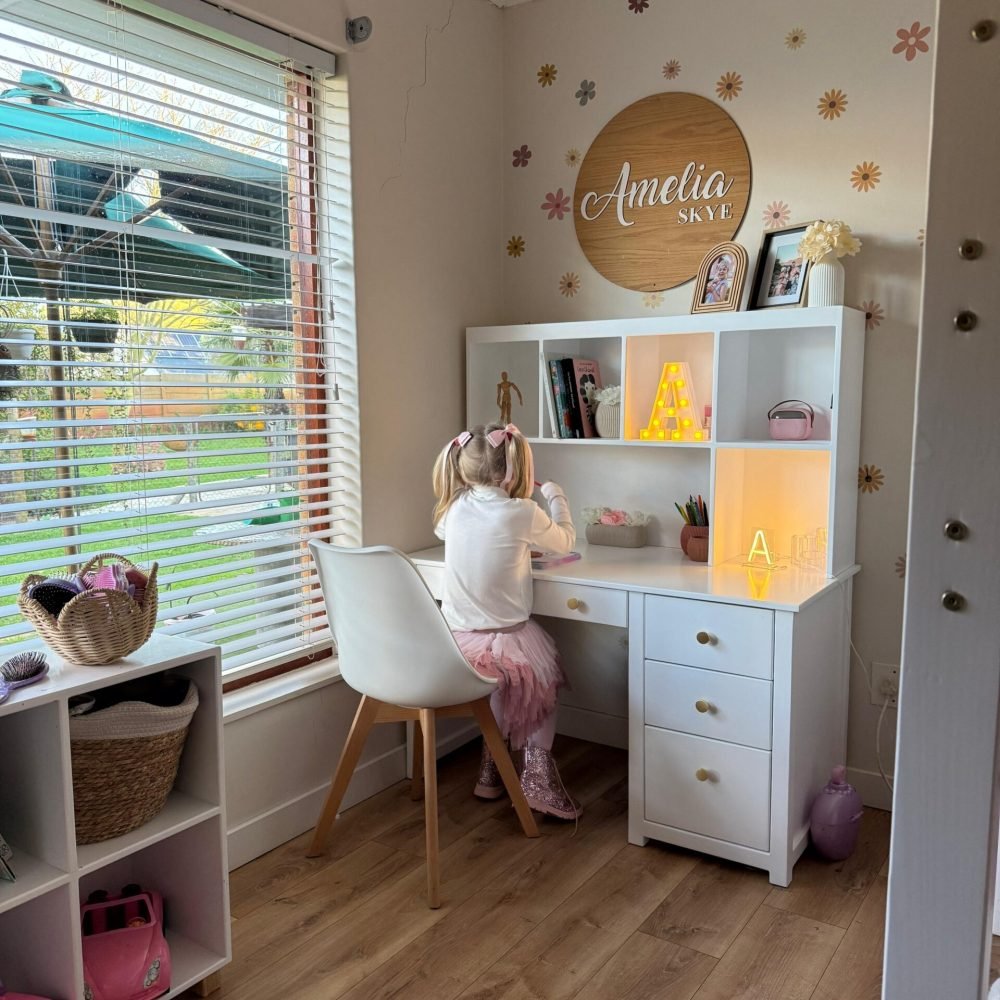
It’s easy for surfaces to become either overcrowded or completely styled out of use. In practice, children need space to spread out, draw, build or move between activities. Keeping tables, desks and shelves clear enough to use makes the room feel more natural and less staged.
Allow the Room to Shift Over Time
A well-designed room doesn’t need to be finished all at once.
As children grow, how they use the space changes – and the room should be able to shift with that. Furniture that isn’t tied to a single purpose tends to last longer and feel more relevant over time.
This also removes pressure to “get it right” immediately. In many cases, the simplest approach – well-made furniture, considered placement and space to use it properly – creates a room that works better day to day, and continues to work as it changes.