
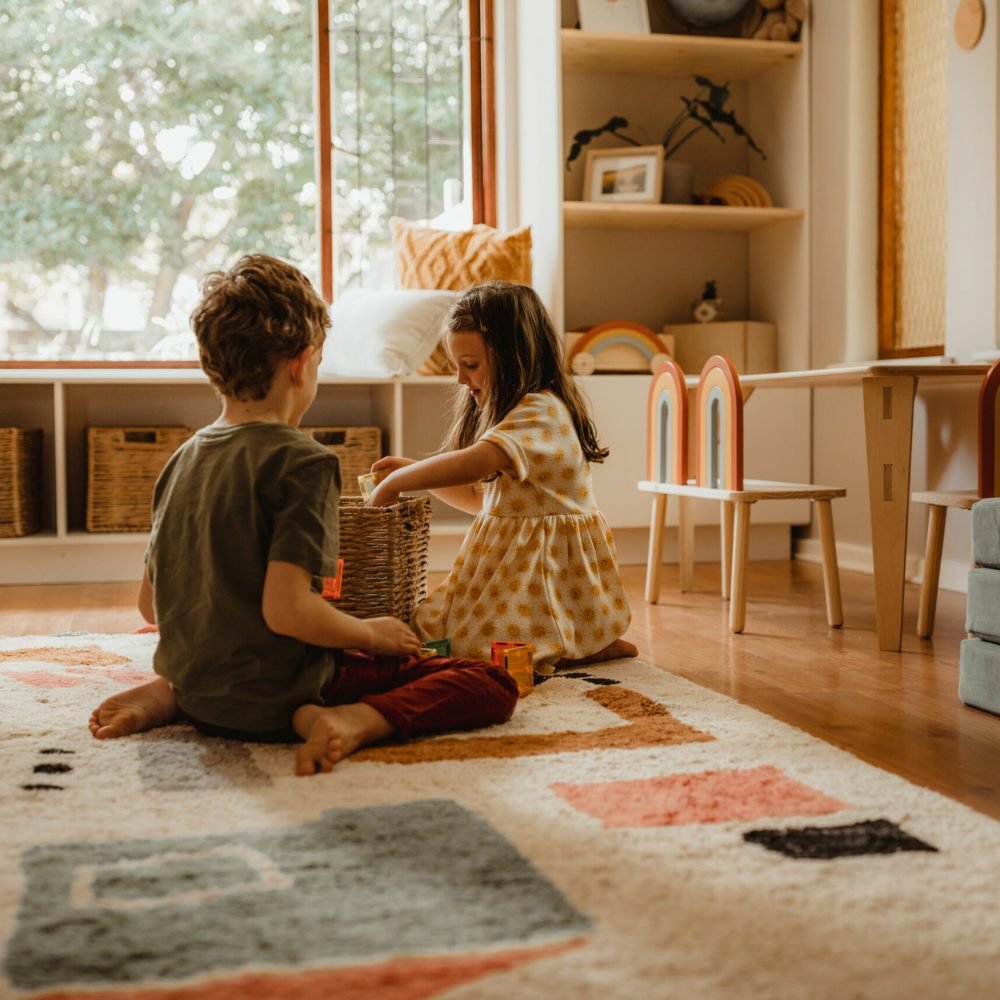

Imaginative play often starts with what children can see and access. The way toys are stored influences how easily children move between activities and how freely they engage with their environment.
Storage plays a quieter role – but an important one.
Visibility Encourages Use
When toys are visible:
- Children remember what they have
- They return to familiar items more often
- They combine different toys more easily
This supports more varied and creative play.
Creating a Flexible Play Environment
Simple storage allows toys to move between:
- Floor play
- Tables
- Different areas of the room
This flexibility supports more open-ended use.
Avoiding Over-Structured Spaces
Overly segmented storage can limit how toys are used.
Instead:
- Keep layouts simple
- Allow items to be grouped naturally
- Avoid rigid categories
This keeps play more fluid.
Balancing Storage and Space
Too much storage can overwhelm a room.
A better approach:
- Combine storage with open space
- Keep only frequently used items visible
- Allow room for movement
Toy storage doesn’t need to dictate how children play – but it can support it. By keeping items visible, accessible and easy to move, the room becomes more adaptable to different types of play.


