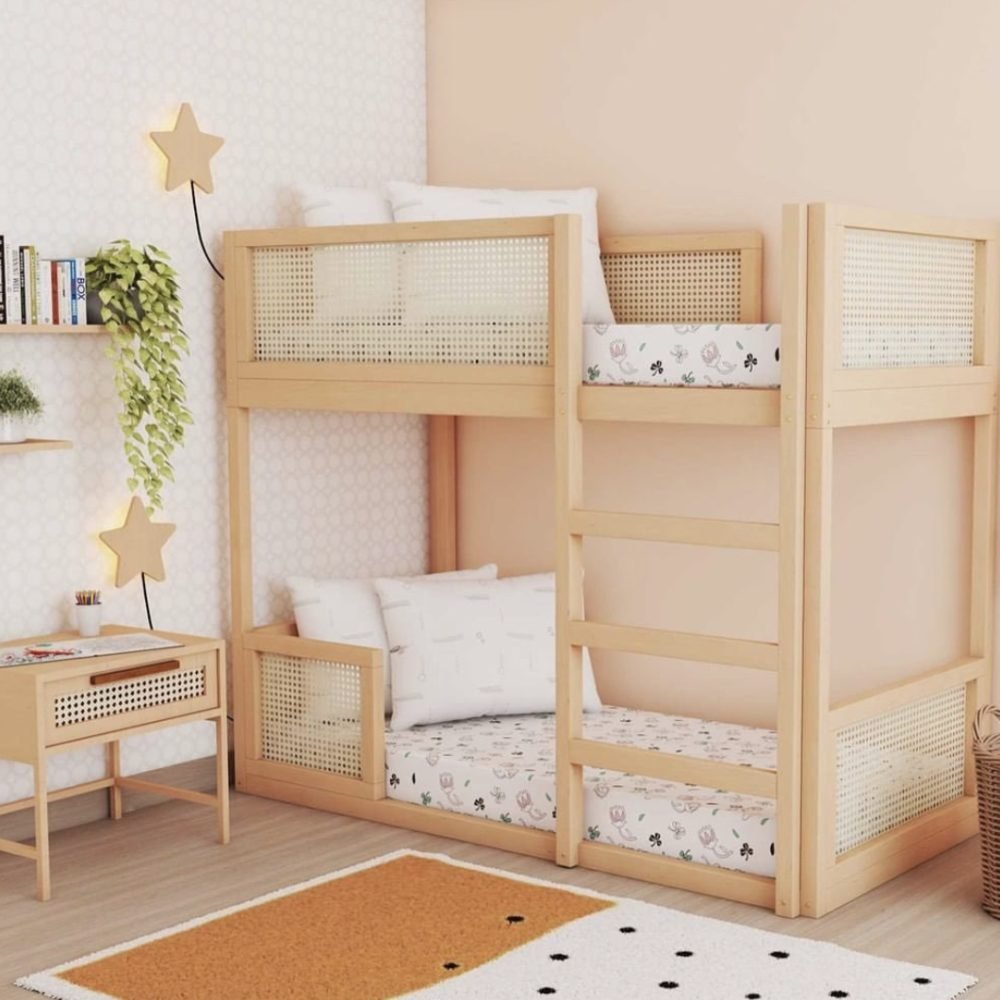

When a Single Bed Makes More Sense
For most children under six, a single bed is the more practical option.
It offers:
- Easy access without climbing
- Lower overall height
- Reduced fall risk
- Greater flexibility in smaller rooms
A standard South African single bed fits comfortably into most children’s bedrooms while leaving space for storage and movement.
For families transitioning from a cot, a well-built classic kids bed provides stability and longevity without unnecessary complexity.
When a Bunk Bed Is the Better Option
Bunk beds often enter the conversation when a room needs to do more – particularly in shared sibling spaces or compact layouts. They make efficient use of vertical height, allowing two children to sleep comfortably without sacrificing floor space. The result is often a room that feels less crowded and more usable. Even so, timing matters. Top bunks are generally recommended for children aged six and older. For younger children, a single bed or lower bunk offers a more secure starting point.
Age Guidelines for Bunk Beds vs Single Beds
Under 4 years old
A single bed with optional safety rails is usually most appropriate.
4–6 years old
A single bed remains the safer default. If siblings share, the younger child should use the lower bunk only.
6+ years old
A bunk bed becomes a practical option for most children, provided the structure is solid and stable.
Safety should guide the decision before convenience or space-saving.
Room Size and Layout Considerations
Room proportions often determine the most practical choice.
A single bed:
- Is easier to reposition
- Works well in narrow rooms
- Allows flexible storage placement
A bunk bed:
- Frees up usable floor space
- Makes better use of vertical height
- Can integrate with desks or under-bed storage
Before deciding, measure:
- Wall length
- Ceiling height
- Clearance around doors and windows
- Circulation space
Longevity: Which Option Lasts Longer?
A standard single bed in South Africa is often the most adaptable choice. Its proportions suit younger children, but it can just as easily carry them through the teenage years without feeling temporary. A bunk bed is more dependent on circumstance. In shared rooms, it can dramatically improve how the space functions. But if sleeping arrangements change over time, it may require reconfiguration or replacement.
If long-term flexibility is important, a single bed offers quiet versatility. If efficient use of space is the priority, a well-built bunk bed can be the more considered solution.
Safety Considerations
Regardless of the bed type:
- Choose solid wood construction where possible
- Confirm weight capacity
- Ensure ladder stability on bunk beds
- Avoid placing bunk beds near ceiling fans or low-hanging fixtures
- Temporary safety rails can provide reassurance for younger children transitioning from a cot.
Frequently Asked Questions
Are bunk beds safe for a 5-year-old?
Top bunks are generally recommended for children aged six and older. A 5-year-old may safely use the lower bunk, but a single bed is often the simpler option.
Is a bunk bed better for small rooms?
In many cases, yes. Bunk beds maximise vertical space, making them ideal for shared or compact bedrooms.
Can a single bed last into the teenage years?
Yes. A standard South African single bed is suitable for many children well into adolescence.
There isn’t a universal answer when choosing between a bunk bed and a single bed. The right option depends on your child’s age, the proportions of the room and how the space will evolve over time.
For younger children or first-bed transitions, a single bed often provides simplicity and reassurance. For shared rooms or compact layouts, a bunk bed can offer practical efficiency without compromising stability.
The best choice is one that feels proportionate — to the room, to your child’s stage, and to how your family lives day to day.
Explore our full collection of wooden kids beds to compare configurations and find a solution that supports both the present and the years ahead.