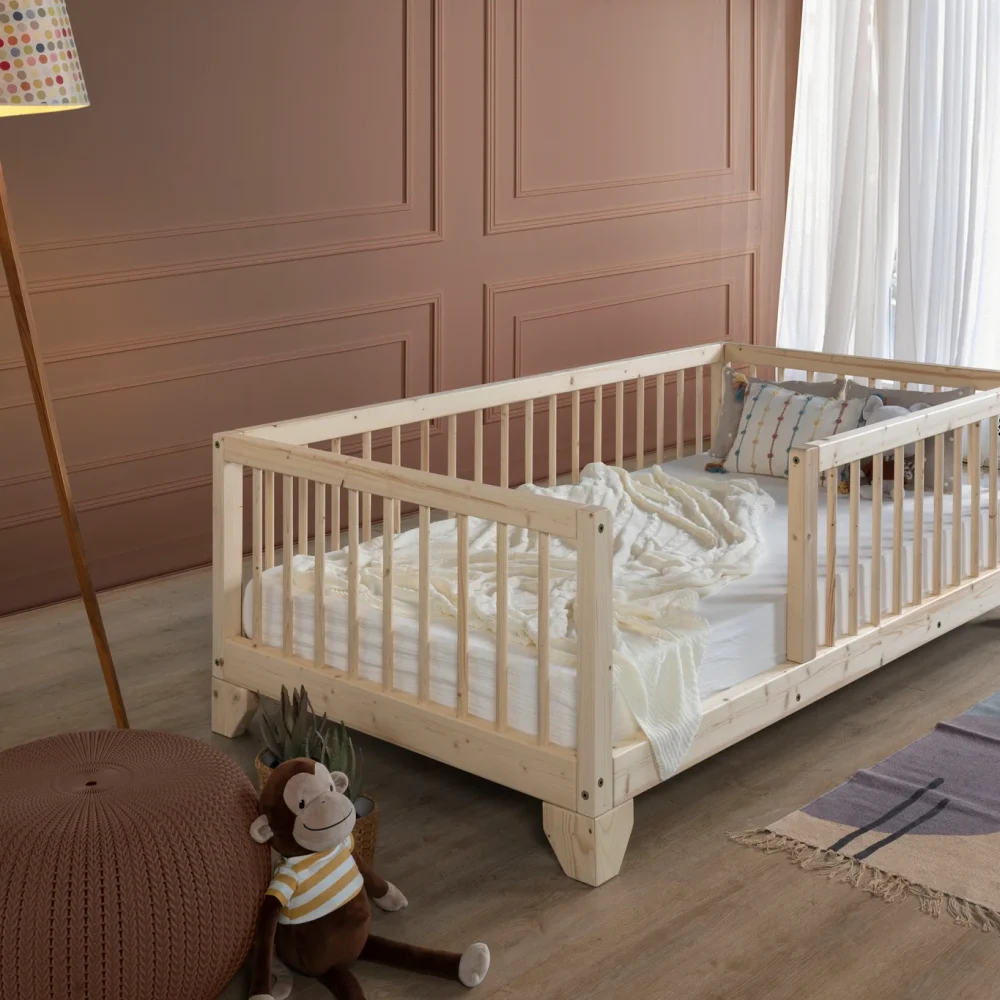

What Age Do Most Children Move From a Cot?
In practice, most toddlers move sometime between their second and third birthday.
Common reasons include:
- Climbing attempts that make the cot unsafe
- Outgrowing the cot mattress height limits
- Beginning toilet training
- Increased independence in daily routines
If a child is climbing out, the move becomes a safety priority. If they are sleeping well and remain within safe height limits, there is usually no urgency to transition immediately.
The goal is not to move early — it is to move at the right time.
Signs Your Child May Be Ready
Beyond age, there are practical indicators that suggest a bed may be appropriate:
- Repeated attempts to climb out of the cot
- Clear physical growth beyond the mattress height
- Expressing interest in a “big bed”
- Managing simple routines independently
Readiness often shows up gradually. When the cot no longer feels secure or proportionate, it may be time to consider the next step.
Safety Considerations When Moving to a Bed
Once a child moves into a bed, they gain greater freedom of movement at night. That shift makes bedroom safety more important.
When selecting a first bed:
- Choose a stable, well-built frame
- Consider lower-profile designs for younger children
- Use safety rails where appropriate
- Ensure the surrounding room is child-safe
If you are considering bunk beds, keep in mind that top bunks are generally recommended for children aged 6 and older. Younger children are typically better suited to single-level options.
Choosing the Right Bed After a Cot
The first bed sets the tone for several years. It should suit the room, allow for growth, and feel proportionate to your child’s stage.
You can explore the full range of wooden kids beds to compare layouts and configurations, but the main categories include:
Classic Kids Beds
A classic kids bed is often the most straightforward transition from a cot. The familiar proportions feel stable, and selected designs can accommodate safety rails if needed.
These beds also continue to work as children grow, making them a practical long-term choice.
House Beds
House beds introduce subtle structure without becoming overly themed. Some lower-profile designs sit closer to the ground, which can feel reassuring in the early stages of independent sleep.
They offer character without sacrificing longevity.
Bunk Beds
Bunk beds are typically better suited to older children or shared bedrooms. While efficient in smaller rooms, they are rarely the first step immediately after a cot.
You can compare all options within our complete kids beds collection to assess sizing, proportions and layout suitability.
What Size Bed Should You Choose?
For most younger children, a single bed offers the right balance of scale and room efficiency. It fits comfortably into standard bedrooms while allowing space for circulation, storage and play.
Some families choose a three-quarter or double bed for longevity, particularly if:
- The room has sufficient space
- The bed will carry into teenage years
- A trundle or under-bed storage may be added
Choosing slightly larger can reduce future replacement, provided the room proportions allow it.
How to Make the Transition Easier
The success of the move often depends more on routine than furniture.
Practical steps that help:
- Involve your child in choosing bedding
- Maintain consistent bedtime routines
- Avoid introducing the change during other major life transitions
- Use safety rails temporarily if needed
- Keep expectations calm and realistic
It may take a few nights for sleep patterns to settle. That adjustment period is normal.
Frequently Asked Questions
Is 2 years old too early to move from a cot to a bed?
Not necessarily. Many toddlers transition between 2 and 3 years old, particularly if they begin climbing out of the cot. Safety should guide the decision more than age alone.
What size bed is best after a cot?
In South Africa, most families begin with a single bed. It offers appropriate scale for younger children while fitting comfortably into standard bedrooms.
Are bunk beds safe for toddlers?
Top bunks are generally recommended for children aged 6 and older. Younger children are safer on single-level beds.
Do I need safety rails on a first bed?
Safety rails can be helpful during the early stages of transition, particularly for active sleepers. Many families remove them once the child is comfortable.
Moving from a cot to a bed is less about reaching a specific age and more about proportion, safety and confidence. With the right timing — and a well-built wooden bed designed for longevity — the transition can feel natural rather than disruptive. If you’re exploring options, view our full range of kids beds in South Africa to compare sizes, layouts and long-term suitability.